
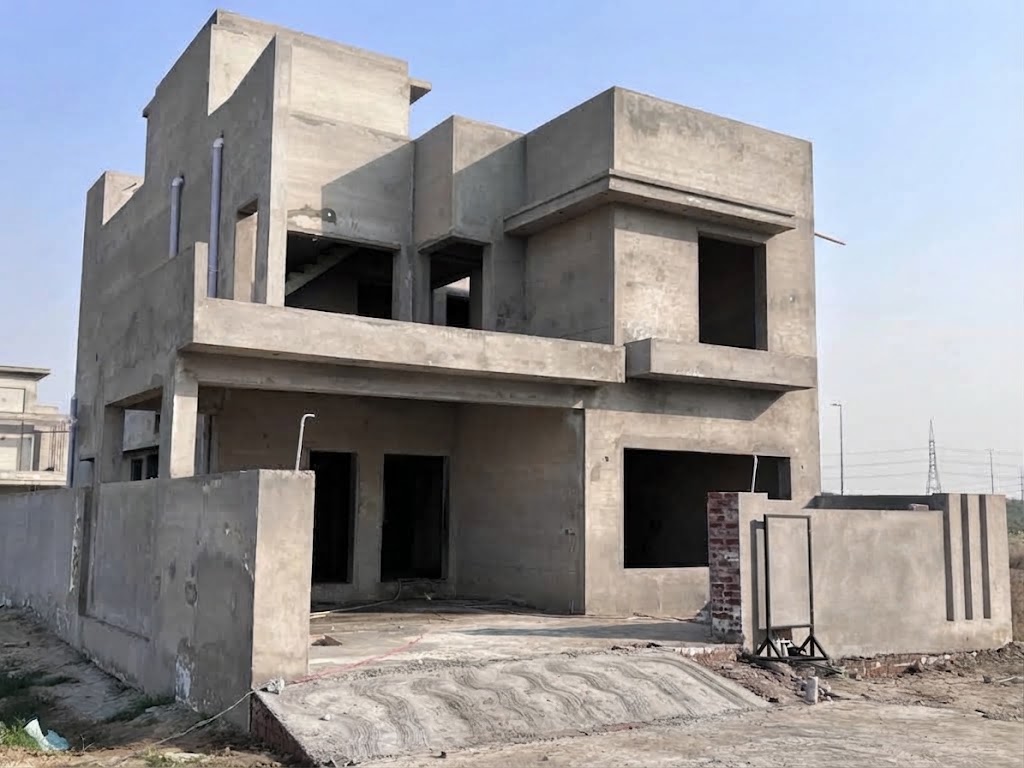
Whether you are building a custom villa or a standard family home, the grey structure is the backbone of your project. It represents the phase where a plot of land transforms into a tangible building skeleton, covering everything from the foundation and brickwork to the roof slab and basic plastering.
One of the most frequent questions homeowners ask is: How long does grey structure construction take?
On average, a standard grey structure takes between 3 to 6 months to complete. However, this timeline fluctuates based on several critical variables. Below is a detailed breakdown of the construction phases and why professional management is essential for staying on track.
Standard Timeline Based on Plot Size
The size of your project is the most immediate predictor of the schedule. For a standard double-story house (G+1), here are the typical durations:
| Plot Size | Grey Structure Duration | Total Project (Turnkey) |
| 5 Marla | 3 – 4 Months | 8 – 10 Months |
| 10 Marla | 5 – 6 Months | 10 – 12 Months |
| 1 Kanal | 7 – 8 Months | 14 – 16 Months |
The Breakdown: Key Stages of the Grey Structure
To understand why it takes several months, you have to look at the mandatory technical steps involved:
Excavation & Foundation (15–25 Days)
The process begins with precise site clearing and excavation to reach stable soil levels. Once the earth is prepped, termite treatment is applied to protect the future structure. Footings are then poured using high-grade concrete, followed by the plinth beam construction. This stage establishes the footprint of your home, ensuring a level and solid base for all subsequent masonry work.
Brickwork & Superstructure (30–50 Days)
During this phase, the building begins to take shape as load-bearing walls and columns are raised. Skilled masons lay bricks or blocks in accordance with the architectural blueprints, creating the rooms and structural frame. Scaffolding is erected to reach higher levels, and lintels are placed over windows and doors, ensuring the weight is distributed safely across the entire skeleton.
Roof Slab Pouring & Curing (15–20 Days per Slab)
Pouring the roof slab is a high-intensity milestone requiring steel reinforcement and precise shuttering. After the concrete is poured, the curing process begins. This involves keeping the slab hydrated for roughly two weeks to reach maximum compressive strength. Rushing this stage is risky; the shuttering must remain in place until the concrete is fully capable of supporting its own weight.
Concealed Services (10–15 Days)
Before walls are sealed, plumbers and electricians install the internal “nervous system” of the house. This includes laying high-quality PPR and PVC pipes for water and drainage, alongside electrical conduits for wiring. Chasing into the brickwork allows these utilities to remain hidden within the walls, ensuring a clean finish once the plastering begins. This step requires absolute accuracy to avoid future leaks.
Plastering (20–30 Days)
Plastering is the final step of the grey structure, providing a smooth finish to internal and external walls. A cement-sand mix is applied carefully to hide imperfections and create straight edges. This layer acts as a protective shield against the elements and prepares the surface for the finishing phase. Proper application ensures that the paint or wallpaper will adhere perfectly later on.
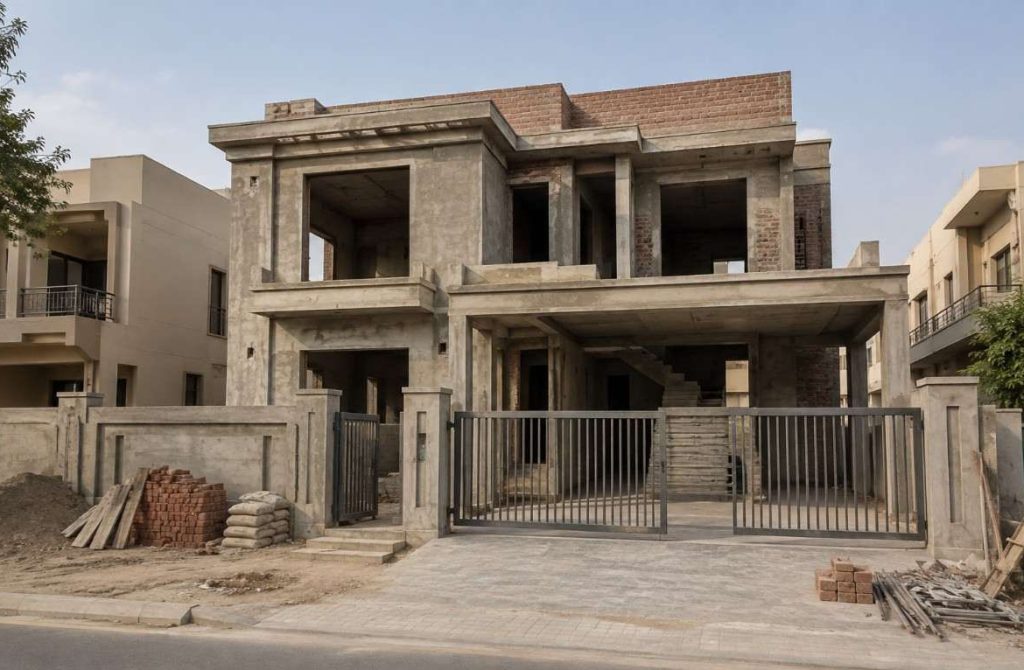
Factors That Can Delay Your Timeline
Even with the best planning, certain factors can push your completion date further out:
Weather Extremes
Climate conditions directly impact construction velocity. Heavy monsoon rains can saturate the soil, making excavation impossible and delaying foundation work. Conversely, extreme summer heat causes concrete to dry too quickly, leading to structural cracks if not managed with intensive curing. Seasonal planning is essential to ensure that sensitive phases, like roof pouring, occur during windows of moderate, predictable weather.
Material Supply Chain
A seamless supply of cement, steel, and bricks is the lifeblood of any project. Disruptions in the supply chain, whether due to market shortages or transport strikes, can halt progress overnight. Procuring essential materials in bulk and maintaining a steady inventory on-site prevents these bottlenecks. Professional management ensures that logistics are coordinated well in advance to keep the timeline moving.
Curing Time
Curing is the most vital yet often overlooked phase of the grey structure. It involves keeping concrete moist to allow the chemical hydration process to complete. For slabs and pillars, this typically requires 14 to 21 days of continuous watering. Skimping on this time to speed up the project compromises structural integrity, leading to long-term issues like seepage and weakness.
Labor Consistency
The availability of skilled masons and laborers fluctuates based on seasonal holidays, harvest periods, or local festivals. Inconsistent manpower can cause a project to stall, even when materials are ready. Professional contractors mitigate this risk by maintaining dedicated, year-round teams. Ensuring a stable labor force is the only way to meet strict deadlines without sacrificing the quality of the masonry.
Why You Must Consult Professionals Now?
It is tempting to manage construction independently to save costs, but this often leads to “timeline creep” and budget overruns. Consulting with an established construction firm offers several advantages:
Accurate Scheduling
Professional contractors utilize advanced project management tools to create a realistic roadmap. By identifying the critical path of construction, they can predict potential bottlenecks before they happen. This precise planning ensures that each phase, from excavation to the final plastering, follows a logical sequence. Detailed scheduling eliminates guesswork, allowing homeowners to plan their finances and move-in dates with total confidence.
Vetted Labor
Access to a reliable, skilled workforce is a hallmark of professional construction management. Unlike independent contractors who may rely on daily wagers, established firms employ seasoned teams with proven track records. This consistency ensures that the masonry, steel fixing, and plumbing are handled by specialists. Vetted labor reduces the risk of onsite errors and ensures the project remains on schedule.
Quality Control
Engineering oversight is the best defense against structural failure. Professionals implement rigorous quality control protocols, checking the strength of steel, the moisture content of bricks, and the concrete mix ratios at every stage. This constant monitoring ensures that the grey structure meets all safety codes. High standards in the “bones” of the building prevent future issues like dampness or settlement cracks.
Bulk Procurement
Established firms leverage their industry connections to secure high-quality materials at competitive rates. Bulk procurement protects your project from sudden market price hikes and ensures that premium-grade cement and steel are always available on-site. By managing the supply chain professionally, they prevent the delays often caused by material shortages, keeping the construction moving forward without interruptions or budget overruns.
Final Thoughts
Building a grey structure is the most critical investment in your home’s lifecycle, requiring patience and technical precision. While the average timeline spans three to six months, the focus must remain on structural integrity over sheer speed. By consulting with professionals, you ensure accurate scheduling, quality materials, and expert oversight. Start your construction journey on solid ground—contact our team today to develop a transparent project roadmap tailored to your vision.