
When most people think of building materials, steel, cement, and bricks usually come to mind. However, sand forms the literal foundation of almost every construction project. From mixing high-strength concrete to plastering walls and laying paving stones, choosing the right type of sand is critical for structural integrity, durability, and a flawless finish.
Not all sand is created equal. Using the wrong grade or type can lead to weak concrete, cracked plaster, and costly structural failures. This blog explores the best types of sand for construction, their unique properties, and how to choose the right one for your project.
Why Sand Selection Matters in Construction?
Sand acts as a fine aggregate in construction mixtures, filling the gaps between larger aggregates like gravel and crushed stone. The particle size, shape, texture, and purity of the sand directly impact:
Workability
Workability defines how easily mortar or concrete can be mixed, transported, and applied without segregation. The right sand texture ensures smooth placement around reinforcement bars, reducing labor effort and helping contractors achieve a uniform, professional finish across walls, slabs, and complex masonry structures.
Compressive Strength
Compressive strength measures a cured structure’s ability to withstand heavy downward loads without failing. Angular, well-graded sand particles lock tightly together within the cement matrix, forming a dense, high-strength bond that supports heavy commercial buildings, residential foundations, and high-traffic pavement sub-bases.
Shrinkage and Cracking
High levels of silt, clay, or excess fine dust in sand retain unwanted moisture, causing severe volumetric shrinkage as mixtures dry. This rapid moisture loss directly triggers surface cracks and weakens internal bonds, making clean, washed aggregates essential for long-term structural durability.
The Top Types of Sand Used in Construction
Choosing the right material is vital. Different construction projects require specific sand types, ranging from coarse aggregates for heavy foundations to fine variants for smooth plastering finishes.
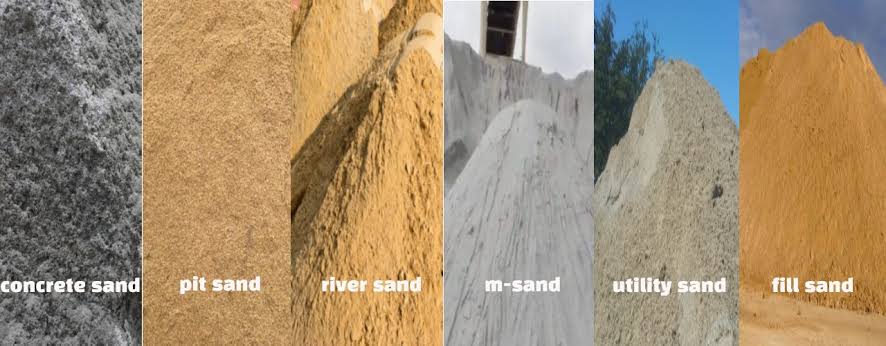
Concrete Sand
Concrete sand is a coarse, sharply textured aggregate heavily washed to eliminate impurities. Its angular grains interlock tightly with cement and gravel, creating a dense matrix that significantly enhances structural load-bearing capacity, making it the premier choice for heavy-duty foundations and asphalt paving projects.
Best For
Heavy-duty structural concrete, structural slabs, asphalt paving, and dense sub-base installations.
Characteristics
Coarse, sharp-grained, angular particles heavily washed to remove dust, silt, and organic impurities.
Why It Works?
Sharp grains interlock under pressure, maximizing structural load capacity and overall concrete strength.
Manufactured Sand (M-Sand)
Produced by mechanically crushing hard granite stones into fine aggregates, M-Sand is an eco-friendly, sustainable alternative to river sand. Free from harmful salts and organic impurities, its cubical shape and consistent grading provide exceptional workability and superior structural strength for modern residential and commercial building projects.
Best For
Eco-friendly concrete production, high-strength structural mixing, masonry bricklaying, and smooth interior or exterior wall plastering.
Characteristics
Artificially produced, uniformly graded fine aggregates with a sharp, cubical particle shape completely free of organic silt and salts.
Why It Works?
Controlled manufacturing creates consistent particle sizing and purity, eliminating weak points and ensuring optimal cement bonding and long-term durability.
Plastering Sand (Pit Sand / Fine Sand)
Sourced from deep underground deposits, plastering sand features naturally fine, smooth grains ideal for achieving flawless wall finishes. Typically sieved on-site to remove oversized pebbles, this specialized sand ensures even application over brickwork and concrete blocks, preventing surface imperfections and minimizing structural cracks.
Best For
Smooth interior and exterior wall plastering, architectural rendering, fine masonry mortar, and detailed brick jointing work.
Characteristics
Fine, smooth, rounded grains sourced from subterranean pits, carefully sieved to eliminate oversized debris and maintain consistency.
Why It Works?
The fine texture allows for effortless trowel application, filling micro-gaps to deliver a smooth surface and prevent cracking during drying.
River Sand
Mined naturally from riverbeds and banks, river sand features smooth, polished grains shaped by continuous water erosion. Historically favored for its natural purity and exceptional workability in mortar mixes, strict environmental regulations and widespread over-mining have led many modern builders to seek sustainable alternatives like M-Sand.
Best For
General masonry work, bricklaying, traditional mortar mixing, and decorative landscaping or playground installations.
Characteristics
Smooth, polished, and naturally rounded grains sourced from riverbanks, possessing high natural purity and consistent texture.
Why It Works?
Water erosion creates rounded particles that glide easily past one another, offering superior workability and smooth application for masonry work.
Fill Sand
Fill sand is an unprocessed, unwashed aggregate containing a mixture of fine particles, silt, and small stones. While completely unsuitable for structural concrete mixes due to its high impurity levels, it serves as an economical, highly stable foundation layer for leveling uneven terrain and backfilling deep construction trenches.
Best For
Backfilling utility trenches, raising ground elevations, and establishing stable sub-bases for patios, walkways, and concrete slabs.
Characteristics
Unwashed, raw aggregate containing variable particle sizes, fine silt, and minor stone fragments without strict grading standards.
Why It Works?
It packs tightly together when mechanically compacted, eliminating air pockets and creating a dense, immovable base layer for overlying structures.
Quick Reference: Matching Sand to Application
| Project Type | Recommended Sand | Why? |
| Foundation / Structural Slabs | Concrete Sand / M-Sand | Provides maximum load-bearing strength and stability. |
| Wall Plastering | Fine Pit Sand | Delivers a smooth, crack-resistant surface finish. |
| Brick / Block Laying | River Sand or Fine M-Sand | Offers balanced workability and strong mortar bonding. |
| Backfilling & Levelling | Fill Sand | Packs densely and provides a solid base layer economically. |
Key Factors to Consider Before You Buy
Before ordering sand for your job site, keep these quality checkpoints in mind:
Silt and Clay Content
Excess silt and clay in construction sand can severely compromise structural integrity. These fine impurities coat sand particles, preventing cement paste from forming a strong bond. Furthermore, they retain unwanted moisture, leading to severe shrinkage and cracking as the concrete dries. Quality sand should maintain minimal silt levels.
Moisture Level
Sand naturally absorbs moisture from rain and humidity, which directly alters the water-to-cement ratio during mixing. Wet sand adds extra water into your concrete formula, resulting in a weak, watery mix with reduced compressive strength. Always test moisture levels and adjust batch measurements accordingly for consistent results.
Salt Contamination
Sand sourced from coastal areas or marine environments often contains harmful chlorides. When used in reinforced concrete, these salts penetrate the mixture and aggressively corrode internal steel reinforcement bars. Over time, rust expansion causes severe structural cracking and catastrophic failure, making salt-free sand mandatory.
Grain Consistency
Uniform grain sizing ensures predictable setting times and structural uniformity across your entire project. If aggregate sizes vary wildly, it creates uneven void spaces within the mixture, weakening the bond. Always source well-graded sand from trusted suppliers to guarantee consistent particle distribution and professional results.
Final Thoughts
Choosing the right construction sand is a balance of understanding your project requirements, material availability, and structural needs. Whether you choose traditional pit sand for a smooth wall finish or heavy-duty concrete sand for structural foundations, investing in clean, high-quality aggregate ensures your build stands the test of time.