
Building your dream home in Lahore is an exciting, yet often overwhelming, journey. If you’ve started talking to builders or researching construction costs, you’ve likely encountered the term “Grey Structure” (or sometimes “Gray Structure”).
This phase is arguably the single most important part of the entire construction process. Getting it right is the difference between a durable, long-lasting home and one that requires costly repairs down the road.
This complete blog breaks down what the grey structure phase includes, the materials involved, and why it is the foundational blueprint for your house in Lahore.
What Exactly is Grey Structure Construction?
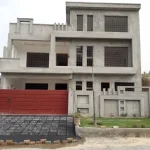
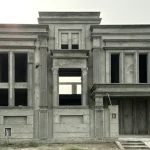
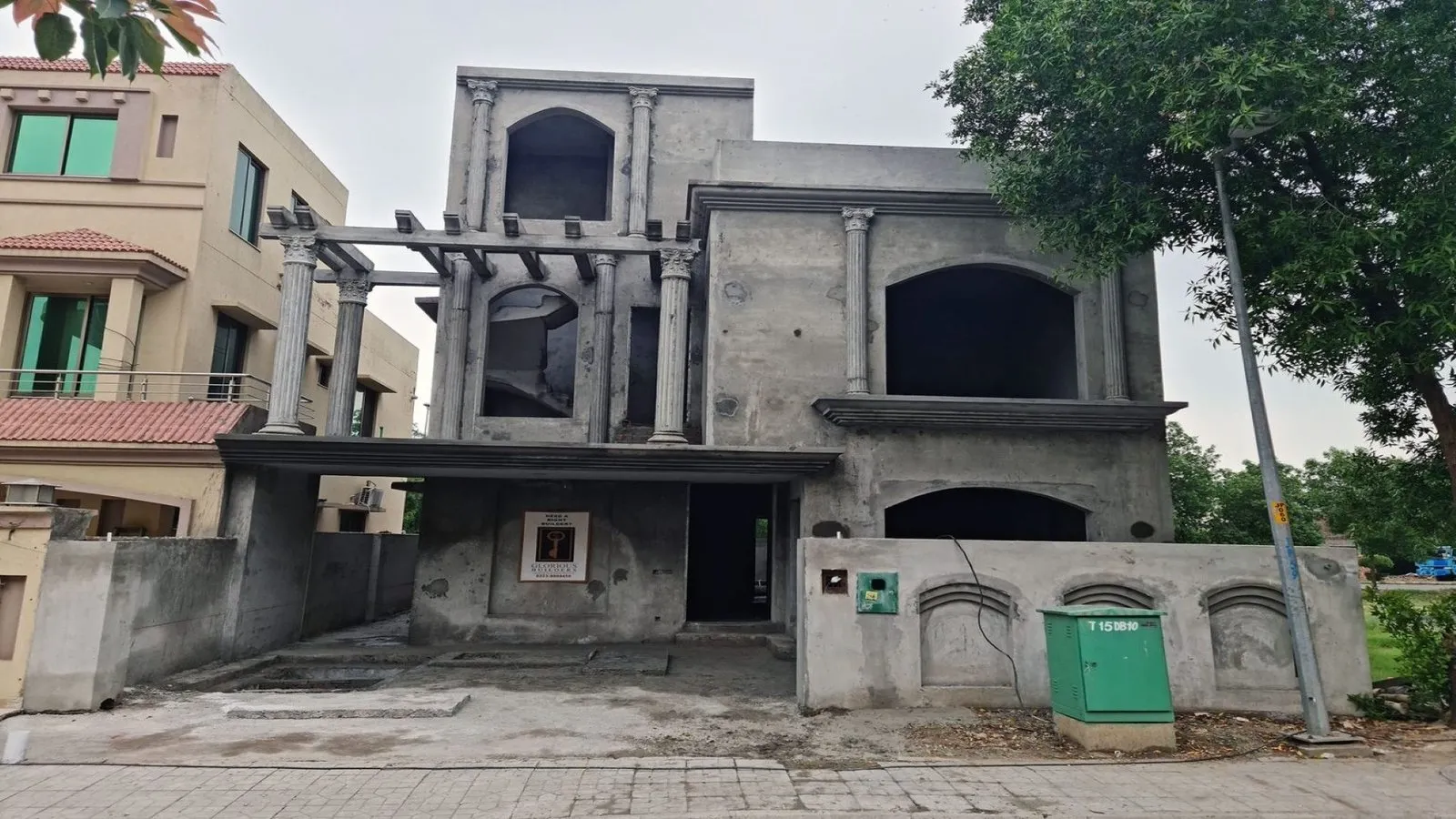
The term “Grey Structure” refers to the skeletal framework or the bare bones of a building. It includes all the essential structural components that give your house its strength, shape, and stability, but it excludes all aesthetic and finishing touches.
Think of it as the house being completely built, but left in its raw, unpolished, concrete-and-brick state—hence the color “grey.” In the context of construction in Pakistan, and specifically Lahore, this phase typically accounts for around 60% of the total construction cost and is the foundation for the building’s longevity.
Grey Structure vs. Finished Structure: The Key Difference
| Feature | Grey Structure | Finished (or Turnkey) Structure |
| Goal | Structural strength and stability (The Skeleton) | Aesthetics, functionality, and habitability (The Skin) |
| Inclusions | Foundation, Walls, Roof, Basic Plumbing/Electrical Conduits, Plaster | Tiles, Paint, Woodwork, Doors, Windows, Fixtures, Cabinets, Ceiling |
| State | Raw, unpolished, cement-coated surfaces | Ready-to-move-in, fully functional home |
| Duration | Typically the longer phase (3–8 months, depending on size) | Shorter phase (2–4 months) |
The Complete Grey Structure Checklist (What’s Included)
The grey structure phase establishes the physical integrity and shape of your house, ensuring it is structurally sound before any decorative work begins. This checklist is vital for homeowners in Lahore to confirm all essential framework elements are completed according to engineering specifications and local building codes. It serves as a benchmark for quality control, covering everything from the unseen foundation to the plastered walls and essential utility conduits embedded within the structure.
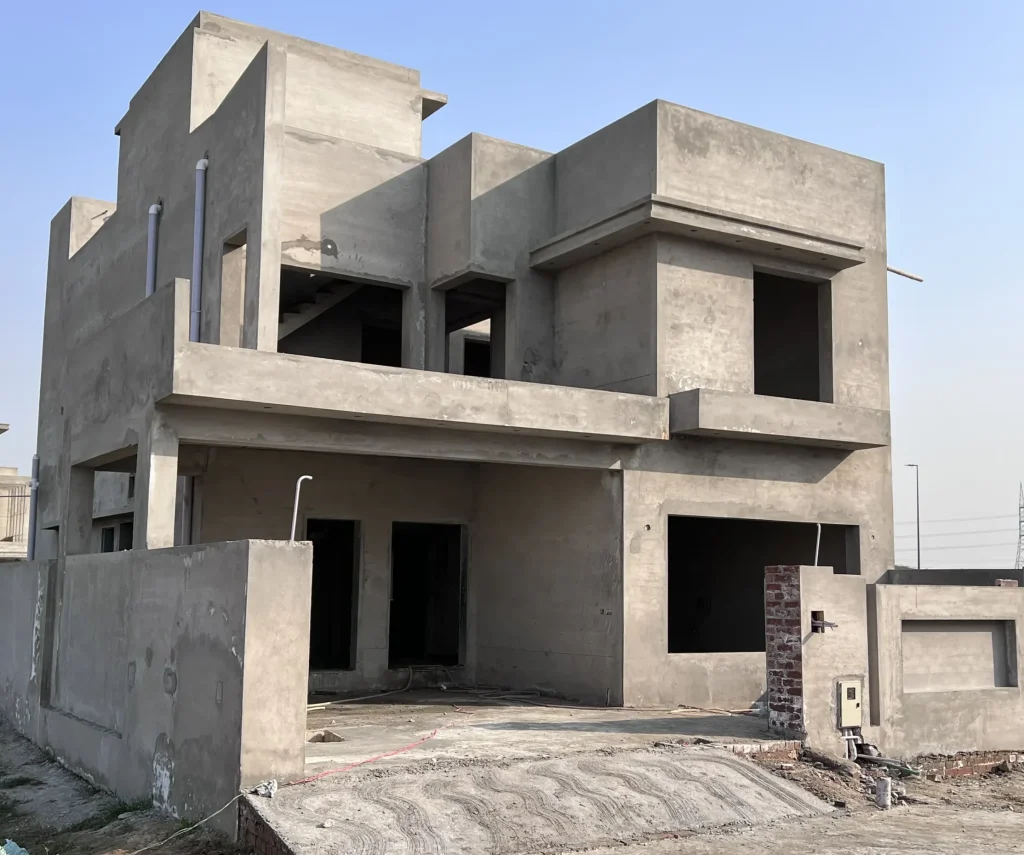
Foundation and Structural Base
This initial stage ensures the house is anchored securely to the ground. It involves excavation followed by laying the Plain Cement Concrete (PCC) base for leveling. Crucially, Reinforced Cement Concrete (RCC), which includes all columns, beams, and the roof slab reinforced with Steel (Sarya), is constructed to bear the entire load of the building. A vital Damp Proof Course (DPC) is also applied above the foundation to prevent moisture from rising into the walls.
Walls and Masonry
This part defines the interior and exterior shape of the home. It focuses on the construction of all boundary and partition walls using high-quality Class-A (Awal) bricks. The masonry work includes forming precise openings for doors and windows, with supporting lintels installed above each one. Once the brickwork is complete and cured, a protective, rough coat of cement plaster is applied to all interior and exterior wall surfaces, preparing them for future finishes.
Roof and Floors
The roof and floors are formed by the primary horizontal structures of the building. The main Reinforced Concrete (RCC) slab is poured to create the roof, providing the ceiling for the floor below and acting as the structural cap. A rough cement screed is laid over the floor base to ensure a level surface for installing finishing materials like tiles or marble later. Basic roof treatment, often including waterproofing layers and protective insulation, is also completed to shield the slab from environmental factors.
Utilities Infrastructure
This critical, yet often unseen, component involves strategically embedding the essential service conduits. All main PVC/PPRC pipes for water supply, sanitation, and drainage are laid underground and within the walls. Simultaneously, the empty plastic conduits (pipes) necessary for future electrical wiring, switches, and sockets are permanently embedded in the masonry and concrete slabs. This infrastructure placement must be finalized early, as these embedded systems are nearly impossible to alter once the structure is completed.
Essential Materials for Grey Structure
The quality of materials used in the grey structure directly determines your home’s life and safety. In Lahore, ensure you are getting the specified quality:
| Material | Purpose | Quality Check in Lahore |
| Steel (Sarya) | Reinforces concrete columns, beams, and slabs. | Must be new, high-grade TMT steel (e.g., Grade 60 or 70) from reputed mills. |
| Cement | Binds materials and forms concrete. | Use premium, fresh brands (e.g., Bestway, Maple Leaf, Lucky). |
| Bricks (Eent) | Forms all non-concrete walls. | Choose Awal (Class-A) bricks—uniform in size, consistent color, and produce a ringing sound when tapped. |
| Sand (Rait) | Fine aggregate for concrete and mortar. | Ensure clean, non-salty sand (e.g., Chenab/Ravi sand) free of clay and silt. |
| Crush (Bajri) | Coarse aggregate for concrete. | High-quality crush (e.g., Sargodha or Margalla crush) is often preferred. |
| Piping | Plumbing and Electrical Conduits. | Use reputable brands for water and electrical pipes to avoid leaks and future wall-breaking. |
Grey Structure Cost in Lahore: A 2025 Estimate
The cost of grey structure construction in Lahore is typically quoted per square foot (Sq. Ft.) of the covered area. It fluctuates based on material costs, labor rates, and the quality grade selected.
As of early to end-2025, a realistic range for A-Category Grey Structure Construction in Lahore is approximately:
PKR 2,800 to PKR 3,500+ per Square Foot
Example Cost Breakdown (Approximate)
For a 5 Marla Double-Storey House with a covered area of approximately 2,000 Sq. Ft.:
| Phase | Calculation | Estimated Cost (PKR) |
| Grey Structure | 2,000 Sq. Ft. x PKR 3,000/Sq. Ft. | PKR 6,000,000 (60 Lacs) |
| Finishing | 2,000 Sq. Ft. x PKR 3,500/Sq. Ft. | PKR 7,000,000 (70 Lacs) |
| Total Estimated Cost | (Grey + Finishing) | PKR 13,000,000 (1 Crore, 30 Lacs) |
Note: These are general estimates and can vary significantly based on the quality of materials, complexity of the architectural design, and the specific contractor’s rate.
3 Tips for a Successful Grey Structure Project
Executing the grey structure phase correctly is paramount for the long-term health and value of your property. This stage represents the major cost and effort in construction, and avoiding common pitfalls here will save you significant expenses and headaches later. Success hinges on a three-pronged approach: unwavering commitment to material quality, professional oversight during execution, and detailed pre-planning of all utility layouts. Implementing these tips ensures structural integrity and a smooth transition to the finishing stages.
Prioritize Quality Over Cost in Structural Materials
Never compromise on the core materials like Steel (Sarya), Cement, and Awal-grade Bricks. These elements are the backbone of your house, and structural faults stemming from low-grade components—such as weak concrete or substandard reinforcement—are prohibitively expensive to fix once encased. Always verify the source and grading of your materials, insisting on certified steel grades and fresh, branded cement. A small saving in this phase can result in massive, long-term costs due to seepage, cracking, or structural instability.
Hire a Qualified Supervisor or Engineer
While your contractor is responsible for execution, having an independent civil engineer or construction supervisor on your team is invaluable. This professional acts as your quality control expert, routinely inspecting critical stages like foundation pouring, steel-binding, and concrete mixing ratios. Their presence ensures the contractor adheres strictly to the approved architectural and structural drawings, preventing deviations that could weaken the building. This oversight is a crucial insurance policy for safeguarding your investment and ensuring compliance with all technical specifications.
Finalize All Drawings in Advance
Before the first brick is laid or the first slab is poured, the architectural, electrical, and plumbing plans must be 100% finalized. Utility conduits for water and electricity are permanently embedded within the walls and concrete slabs during the grey structure phase. Making changes later requires breaking walls and floors, leading to wasted time, materials, and potential damage to the surrounding structure. Detailed pre-planning, ensuring the placement of every switch, socket, and drain point is correct, is essential for a smooth and efficient build.
Final Thoughts
The Grey Structure is the bedrock of your Lahore home, determining its strength and longevity. By understanding this comprehensive checklist from the foundation and steelwork to the embedded utilities homeowners can ensure superior quality. Prioritizing these structural elements guarantees a secure, durable, and lasting investment.