
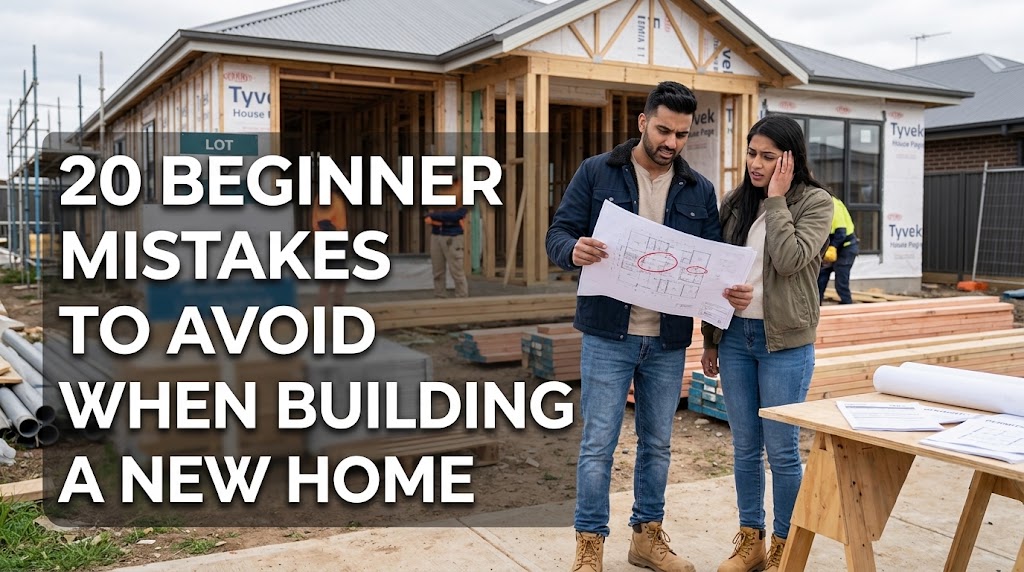
Building your dream home should be one of the most exciting milestones of your life. However, diving into custom home construction without a solid roadmap can quickly turn that dream into a stressful, budget-busting nightmare.
Whether you are acting as your own general contractor or working with an experienced custom builder, knowing what not to do is just as important as knowing what you want.
Here are the 20 most common beginner mistakes to avoid when building a new home, ensuring your project stays on time, on budget, and structurally sound.
- Skipping the Pre-Construction Planning Phase
Rushing to break ground before your blueprints, finishes, and engineering reviews are finalized is a recipe for disaster. Every change made after construction begins incurs costly change orders and frustrating delays. Nail down every detail on paper first to save thousands of dollars and countless weeks of waiting. A meticulous planning phase ensures all structural components align perfectly before any physical labor starts on site.
- Failing to Establish a Realistic Emergency Buffer
First-time builders often create a budget based strictly on base estimates, leaving zero room for the unexpected. Material costs fluctuate constantly, and hidden site issues always pop up during excavation. Always set aside an extra 10% to 15% contingency fund specifically for unforeseen expenses. This financial cushion prevents you from facing sudden panic or having to compromise on critical finishes halfway through.
- Choosing the Wrong Location (or Ignoring the Lot Dynamics)
Falling in love with a piece of land without checking its topography, soil composition, or utility access can destroy your budget before you frame walls. Steep slopes or rocky earth require expensive clearing and specialized foundation work. Always pay for a professional land survey and soil test before purchasing any lot to guarantee the property can physically and legally support your dream home design.
- Overlooking Future Lifestyle Needs
Designing a home exclusively for your life today is a short-sighted strategy. Consider where you will realistically be in 5, 10, or 20 years. Do you plan to grow your family, host aging parents, or work remotely? Will aging-in-place features like wider doorways or a main-floor bedroom become necessary? Build flexibly for your evolving future, not just your current daily routine.
- Ignoring Sun Orientation and Natural Light
Where your home sits relative to the sun dictates your future comfort and utility bills. Failing to account for natural light means you might end up with a dark living room or a kitchen that turns into an unbearable greenhouse every summer afternoon. Strategic window placement harnesses passive solar energy, keeping your interior naturally bright, warm in the winter, and comfortably cool during peak summer months.
- Designing Solely for Aesthetics Over Functionality
An open-concept living space looks stunning in architectural magazines, but it can quickly become an echo chamber lacking privacy, acoustic dampening, and storage. Always balance visual appeal with practical day-to-day functionality, especially regarding traffic flow. A home that looks incredible on Instagram is only successful if it genuinely supports the way your family cooks, relaxes, and lives every single day.
- Skimping on Built-In Storage and Closets
A common regret among new homeowners is not having enough storage space. In the quest for sprawling open rooms, hallways and bedroom closets are often shrunk down to minimum sizes. Ensure your custom floor plan includes dedicated linen closets, an oversized pantry, a functional mudroom, and integrated garage storage. Adequate storage keeps clutter hidden and maintains the clean lines of your new space.
- Forgetting About Outlets, Switches, and Lighting Plans
Trying to figure out lighting and electrical placement on the fly during framing usually leads to poorly placed switches and a lack of outlets where you need them. Map out your furniture layout early so you know where media hookups, bedside lamps, and heavy kitchen appliances belong. Well-planned lighting layers ambient, task, and accent fixtures to completely transform the mood of every room.
- Not Checking Local Zoning Laws and HOA Restrictions
Before drawing up expensive architectural plans, thoroughly research local municipal zoning codes, building height limits, and Homeowners Association covenants. You do not want to design a modern flat-roof home only to discover the neighborhood strictly mandates traditional pitched roofs. Clear understanding of legal restrictions prevents wasted design fees, rejected building permits, and bitter neighborhood disputes down the road.
- Hiring the Lowest Bidding Contractor
It is tempting to go with the general contractor offering the cheapest estimate, but in custom home building, you genuinely get what you pay for. Extremely low bids often signal cut corners, substandard building materials, or hidden fees that will surface later. Always prioritize contractor reputation, transparent communication, and verified past client work over a deceptively low initial price tag.
- Failing to Put Everything in Writing
Handshakes and casual verbal agreements hold zero legal weight when a major dispute arises on a hectic construction site. Ensure every single agreement, material specification, milestone timeline, and payment schedule is explicitly detailed in a signed, legally binding contract. A comprehensive written document protects both parties, establishes clear accountability, and prevents costly misunderstandings throughout the entire building lifecycle.
- Not Establishing a Clear Communication Protocol
Miscommunication between you, your primary builder, and various subcontractors causes expensive, preventable mistakes. Establish who the single point of contact is, how often formal progress updates will be delivered, and how change orders must be authorized. Utilizing written email sign-offs for modifications ensures everyone stays on the same page and eliminates the dangerous game of telephone.
- Making Too Many Mid-Construction Changes
Changing your mind on wall placements, custom tile selections, or plumbing fixtures halfway through the build halts momentum and triggers heavy penalty fees. Commit to your material and design selections early so your builder can order products ahead of schedule. Indecision is a primary driver of budget overruns and extended construction timelines that test your patience.
- Underestimating Landscaping and Exterior Costs
Many beginners blow their entire financial reserve on the interior structure, leaving the yard as a muddy, unfinished wasteland. Retaining walls, professional sod, asphalt driveways, backyard patios, and outdoor drainage systems add up fast. Always budget for the complete exterior envelope from day one so your property looks finished and functions properly the moment you move in.
- Ignoring Energy Efficiency and Insulation
Choosing cheaper baseline insulation and single-pane windows might save you a little upfront cash, but it will haunt you with exorbitant heating and cooling utility bills every single month. Invest heavily in high-performance windows, proper attic insulation, and advanced energy-efficient HVAC systems. Superior thermal envelopes pay for themselves quickly through drastically reduced long-term energy consumption and enhanced indoor comfort.
- Forgetting Proper Site Drainage
Water is a structural foundation’s absolute worst enemy. If your lot grading slopes toward your house instead of safely away from it, you risk flooded basements, cracked concrete slabs, and persistent mold issues. Ensure your civil site plan accounts for robust gutter run-off management, French drains, and smart exterior grading to keep moisture far away from your walls.
- Falling Behind on Permit and Inspection Schedules
Skipping or delaying official municipal building inspections can grind your project to a complete halt and even force you to tear down completed work to satisfy code compliance. Let your general contractor manage this bureaucratic process closely, but stay actively informed. Passing every milestone inspection on schedule ensures your home is legally compliant and structurally safe.
- Micromanaging Every Single Detail
While you should certainly stay closely involved in the creation of your home, hovering over subcontractors and questioning every nail can sour professional relationships on the job site. Trust the skilled professionals you carefully hired, but maintain healthy oversight through scheduled weekly walkthroughs. A collaborative, respectful environment yields better craftsmanship and keeps morale high.
- Letting Emotion Override Financial Sense
It is easy to get emotionally attached to luxury finishes, such as imported Italian marble countertops or custom artisan staircases, that push you far past your financial ceiling. Stick strictly to your established budget parameters, and only splurge on custom items that genuinely add long-term value to your daily life and structural integrity. Discipline prevents post-construction financial stress.
- Failing to Do a Thorough Final Walkthrough (Punch List)
Do not hand over your final payment the exact second the crew packs up their tools. Conduct a meticulous, slow walkthrough with your builder to create a detailed punch list of minor defects, unpainted trim, sticking doors, or cosmetic touch-ups. Ensuring every single item on this list is fully resolved before signing that final check guarantees absolute satisfaction.
Conclusion
Building a new home is a marathon, not a sprint. By steering clear of these common beginner pitfalls, keeping your communication tight, and protecting your budget buffer, you will step across the threshold of your new home with pride—and zero buyer’s remorse.